Introduction
Automated accessibility checks provide a strong foundation for building inclusive products, but modern applications present increasingly complex challenges—dynamic interfaces, custom widgets, internationalization, and evolving UI states. Accessibility testing software helps teams systematically detect structural issues, such as missing labels, incorrect roles, poor color contrast, orphaned controls, and misuse of landmarks. Running these scanners in CI pipelines on every pull request and at merge ensures obvious regressions are caught early. At release, critical user journeys—like sign-in, checkout, and account settings—undergo deeper manual testing and assistive technology (AT) validation. Attaching evidence such as screenshots, DOM snippets, and logs to failures makes triaging faster and blame-free, allowing fixes to be confidently deployed within the sprint.
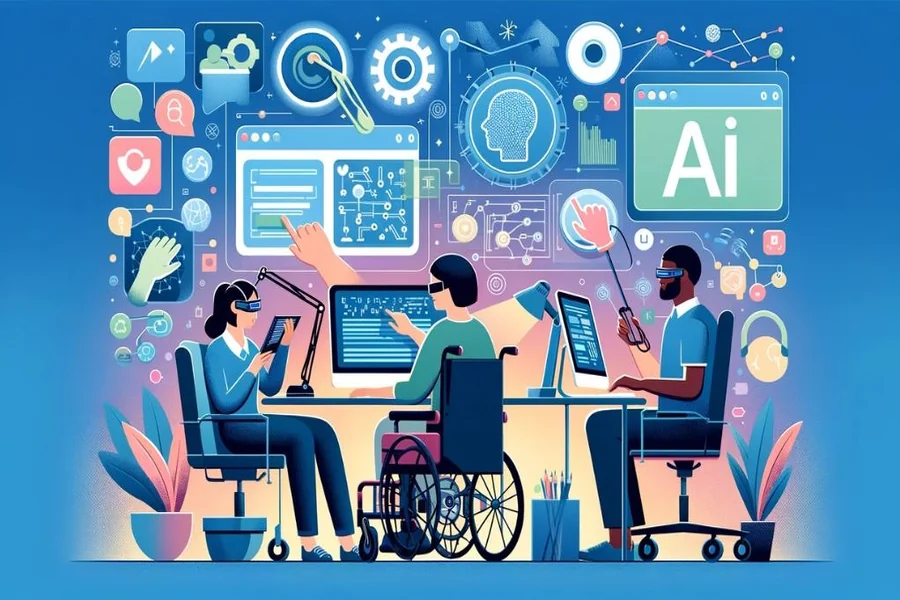
On top of this foundation, AI is increasingly essential for keeping pace with modern front-end complexity. Computer vision models can detect subtle visual regressions affecting readability or focus visibility. NLP models can identify ambiguous link text or repetitive headings that confuse screen readers. Model-driven exploration enables programmatic “keyboard-walking” of interfaces, revealing focus traps, unreachable controls, or navigation issues that static rules often miss. Impact-based prioritization ensures that checks target templates most likely to regress based on recent code changes, keeping pipelines efficient while addressing high-risk areas. Additionally, AI-powered data generation can create rich, privacy-safe scenarios—long labels, error states, multiple validation messages—that uncover accessibility defects earlier in development. Importantly, this intelligence complements, rather than replaces, manual testing and AT sessions, which remain critical for evaluating clarity, cognitive load, and real-world usability.
With that context in place, it’s clear why modern programs benefit from software testing ai. AI-driven accessibility testing offers three key benefits: scale, speed, and signal quality. Scale comes from generating meaningful checks across diverse locales, devices, and browsers—beyond what manual testing alone could cover. Speed comes from impact-focused execution and self-healing capabilities that reduce false positives when the DOM changes. Signal quality improves as vision models and anomaly detectors highlight issues that users actually experience: invisible focus, off-screen content, jittery layouts, or unannounced errors. Proper guardrails—conservative thresholds, human approval for changes, versioned prompts and outputs, and synthetic data for privacy—ensure safe and reliable adoption.
When implemented correctly, AI-enhanced accessibility transforms it from a periodic audit into an always-on process, enabling teams to deliver inclusive, high-quality experiences at the pace modern businesses demand.