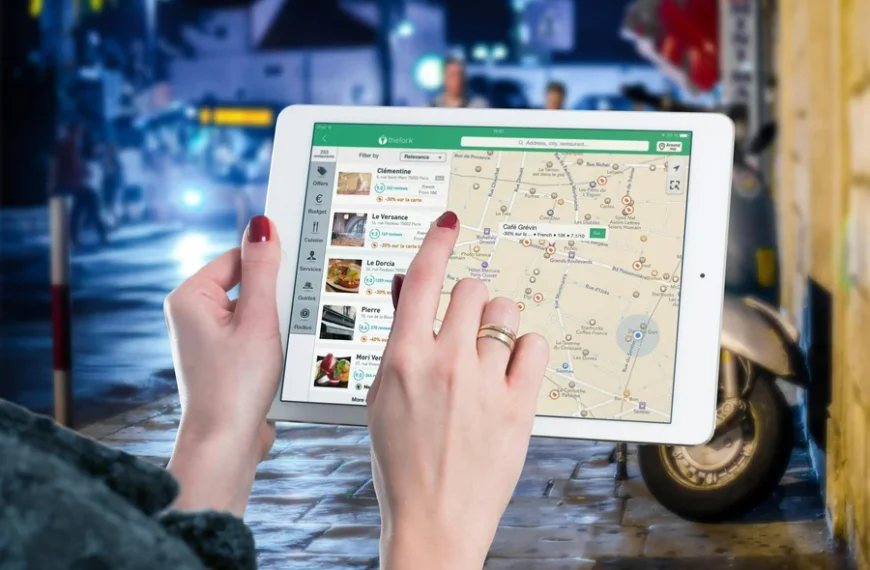
Technology continues to evolve at an unprecedented pace, shaping industries and redefining the way we live, work, and interact. Staying informed about the latest trends in technology is essential for businesses, professionals, and enthusiasts alike. In this article, we explore the most significant, cutting-edge developments that are driving innovation and transforming the global landscape.
Artificial Intelligence and Machine Learning Advancements
Artificial Intelligence (AI) remains at the forefront of technological progress. Recent advances have propelled AI from simple automation to complex decision-making and predictive analytics. Machine learning (ML) algorithms now exhibit enhanced capabilities in natural language processing (NLP), computer vision, and reinforcement learning.
One of the newest trends is the widespread adoption of Generative AI models such as GPT-4 and other large language models (LLMs). These systems have revolutionized content creation, customer service automation, and even software development by generating human-like text, code, and images. AI-driven solutions are increasingly embedded in various sectors, including healthcare for diagnostics, finance for fraud detection, and manufacturing for predictive maintenance.
The integration of AI with edge computing is another crucial trend, allowing real-time data processing closer to data sources and reducing latency. This is vital for applications such as autonomous vehicles, smart cities, and IoT devices.
5G and Beyond: The Next-Gen Connectivity Revolution
The global rollout of 5G networks marks a pivotal moment in connectivity technology. Offering speeds up to 100 times faster than 4G and ultra-low latency, 5G unlocks new possibilities for mobile broadband, immersive experiences, and industrial automation.
With 5G, industries can harness massive IoT deployments, enabling millions of connected devices in smart factories, agriculture, and healthcare. The emergence of private 5G networks tailored for enterprises further accelerates digital transformation, providing secure, high-speed connectivity for mission-critical applications.
Looking ahead, research into 6G technology is already underway, promising to push the boundaries of wireless communication even further by incorporating AI for network management, terahertz frequency bands for ultra-high speeds, and enhanced integration with satellite systems.
Extended Reality (XR): Augmented, Virtual, and Mixed Realities
Extended Reality, encompassing Augmented Reality (AR), Virtual Reality (VR), and Mixed Reality (MR), is transforming how we interact with digital content and environments. Recent technological advancements have improved headset comfort, visual fidelity, and interaction capabilities, making XR more accessible to consumers and businesses.
In retail, AR enables virtual try-ons, while VR powers immersive training simulations across industries. The rise of the metaverse — a persistent, shared virtual space — is driving demand for XR technologies, aiming to create interconnected digital ecosystems for work, socializing, and entertainment.
Companies are investing heavily in XR hardware and software platforms, and innovations such as haptic feedback, eye tracking, and spatial audio are enhancing user immersion. The blending of XR with AI further personalizes experiences, making this a rapidly growing technology trend.
Quantum Computing: The Dawn of a New Computational Era
Quantum computing is no longer theoretical; it is becoming a practical tool for solving problems beyond classical computer capabilities. By leveraging quantum bits (qubits), these computers can perform complex calculations exponentially faster, with profound implications for cryptography, materials science, and optimization problems.
Recent breakthroughs in quantum error correction and qubit coherence have brought us closer to quantum supremacy, where quantum machines outperform traditional supercomputers in specific tasks. Leading technology firms and governments are investing billions to develop quantum hardware and software ecosystems.
Though quantum computing remains in early stages, its potential to revolutionize drug discovery, financial modeling, and cybersecurity places it among the most critical technology trends to watch.
Sustainable Technology and Green Computing
Sustainability is a growing priority in technology development. Innovations in green computing aim to reduce the environmental footprint of data centers, devices, and networks. Techniques such as energy-efficient processors, liquid cooling, and renewable energy sourcing are being widely adopted.
Carbon-neutral data centers and advancements in AI-powered energy management systems optimize resource usage and minimize emissions. Additionally, the rise of circular economy principles in hardware design encourages repairability, reuse, and recycling.
Emerging technologies like blockchain are also being adapted to reduce energy consumption through more efficient consensus algorithms. The global push for sustainability is driving innovation that not only benefits the planet but also creates economic value.
Cybersecurity Innovations in a Digital-First World
As technology advances, so do the threats targeting digital assets. The latest trends in cybersecurity focus on proactive threat detection, zero-trust architectures, and AI-driven defense mechanisms.
The increasing adoption of cloud services and remote workforces has expanded the attack surface, necessitating stronger identity and access management (IAM) solutions. Techniques such as multi-factor authentication (MFA), behavioral analytics, and security orchestration automation and response (SOAR) platforms enhance organizational resilience.
Moreover, post-quantum cryptography research aims to safeguard sensitive data against future quantum attacks. Cybersecurity continues to evolve rapidly, emphasizing the need for continuous innovation to protect individuals and enterprises alike.
Internet of Things (IoT) Expansion and Smart Ecosystems
The Internet of Things is expanding beyond simple connected devices into sophisticated smart ecosystems. Integrating IoT with AI and 5G networks creates intelligent environments capable of autonomous decision-making.
Smart homes, cities, and industrial IoT (IIoT) applications are becoming more prevalent. Sensors, actuators, and controllers work together to optimize energy consumption, enhance public safety, and streamline manufacturing processes.
Recent trends include IoT edge analytics, which process data locally to reduce bandwidth and improve responsiveness. Security frameworks specifically tailored for IoT devices are also evolving to counteract vulnerabilities inherent in connected environments.
Blockchain and Decentralized Finance (DeFi) Innovations
Blockchain technology continues to disrupt traditional financial and business systems through its decentralized, transparent nature. Beyond cryptocurrencies, blockchain facilitates smart contracts, secure supply chain tracking, and digital identity management.
The rise of Decentralized Finance (DeFi) platforms allows users to access financial services without intermediaries, offering lending, borrowing, and asset trading on blockchain networks. Innovations in Layer 2 scaling solutions improve blockchain transaction speed and reduce costs.
Furthermore, emerging trends like Non-Fungible Tokens (NFTs) are reshaping digital ownership and monetization in art, gaming, and entertainment sectors. Blockchain’s evolving landscape represents a critical technological trend with broad-reaching implications.
Automation and Robotics Integration Across Industries
Automation is advancing beyond traditional manufacturing lines into diverse fields through intelligent robotics and AI-driven systems. Collaborative robots (cobots) are working alongside humans to enhance productivity, safety, and precision.
In logistics, autonomous vehicles and drones optimize delivery and inventory management. Healthcare robotics assist in surgeries and patient care, while agriculture leverages automated machinery for precision farming.
Recent technological progress includes improved sensors, AI-powered vision systems, and advanced control algorithms that increase the flexibility and intelligence of robots. The integration of robotics with IoT and AI enables adaptive, real-time responses, driving a new wave of industrial transformation.
Biotechnology and Health Tech Innovations
Technological innovation is reshaping healthcare and biotechnology sectors, offering personalized medicine, advanced diagnostics, and novel treatment options. The fusion of AI with genomic data accelerates drug discovery and enables tailored therapies.
Wearable health devices and remote patient monitoring systems are becoming ubiquitous, providing continuous data streams for proactive care. Breakthroughs in CRISPR gene editing, synthetic biology, and bioinformatics open doors to treating previously incurable diseases.
Digital health platforms powered by AI and blockchain improve data security, patient engagement, and clinical trial management. These developments highlight the vital role of technology in advancing human health and wellbeing.
Conclusion
The latest trends in technology demonstrate a dynamic interplay of innovation, connectivity, and sustainability. From AI and 5G to quantum computing and green tech, these advancements are reshaping every facet of society. Embracing these trends is crucial for organizations aiming to maintain competitiveness and harness the transformative power of technology.